Mentormatch
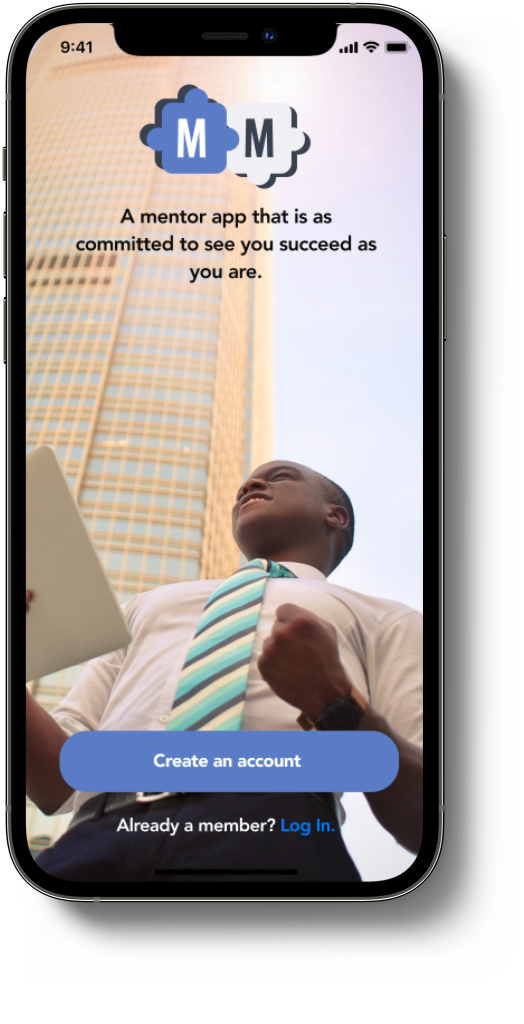
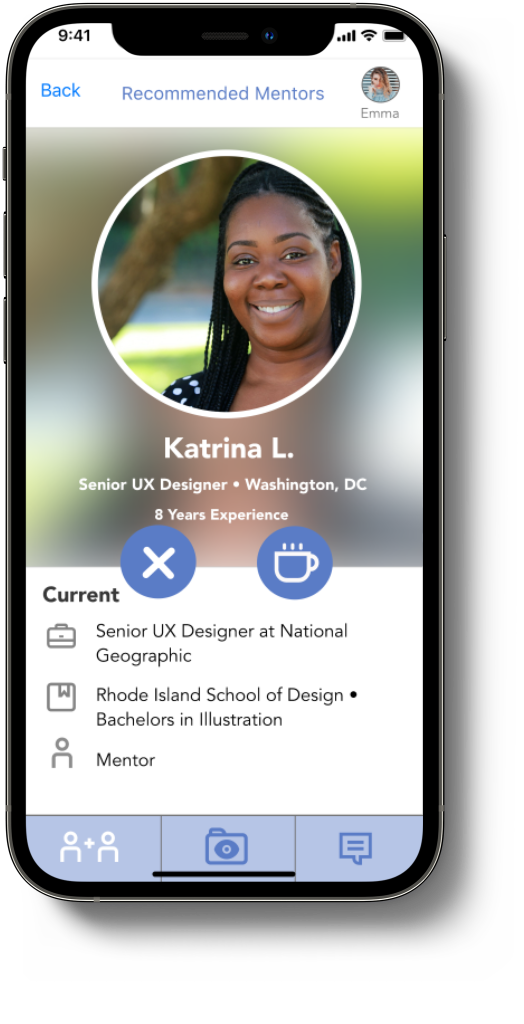
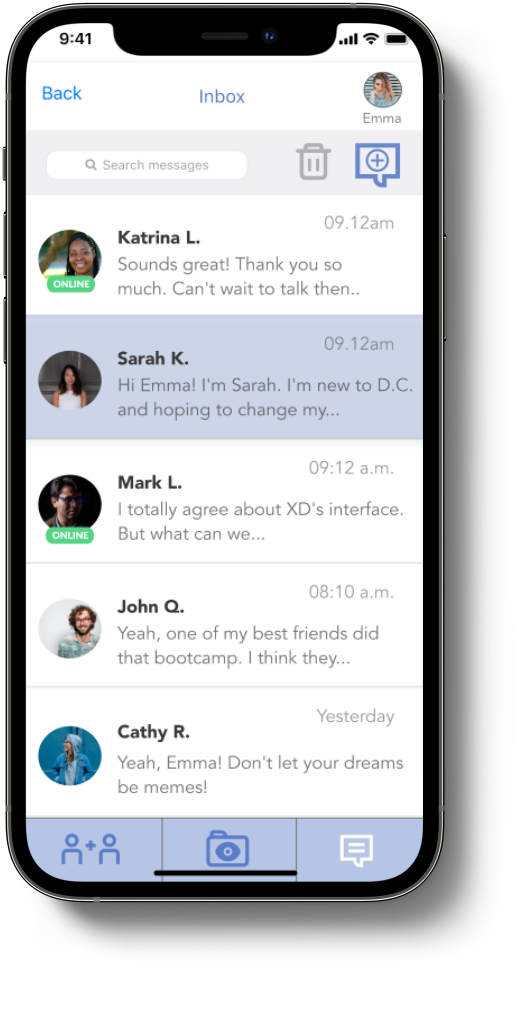
MentorMatch helps professionals find the right mentors through personalized matching and collaborative feedback tools that support long-term career growth.
Visual Design Lead
UI/UX
Interaction Design
User Research
My Role:
Tools:
Adobe XD
Jira
Miro
The Problem?
Professionals who are in the process of switching careers or seeking feedback on their personal projects outside of work often struggle to find the time to search for a mentor who aligns with their goals, understands their industry, and can provide meaningful guidance. Beyond just finding the right fit, they also face challenges in establishing a professional, long-lasting relationship built on trust, shared values, and mutual growth.
Research
For our preliminary research, we conducted 4 user interviews via zoom to collect qualitative data from our target users. We also created and distributed a Google survey to 13 people.
Key Findings

A Search for Navigators: Our users want more than networking. They are looking for mentors who help bridge the gap between their current roles and future goals, especially since over half the community is focused on professional growth.
Support for the Whole Person: While many join for career support, they stay for meaningful human connection. Users value mentors who recognize that professional success and personal growth are deeply connected.
A Personalized Journey: User needs vary widely, showing that one size does not fit all. They expect guidance that matches their life stage, values, and preference for either quick advice or deeper support.
What does this mean?
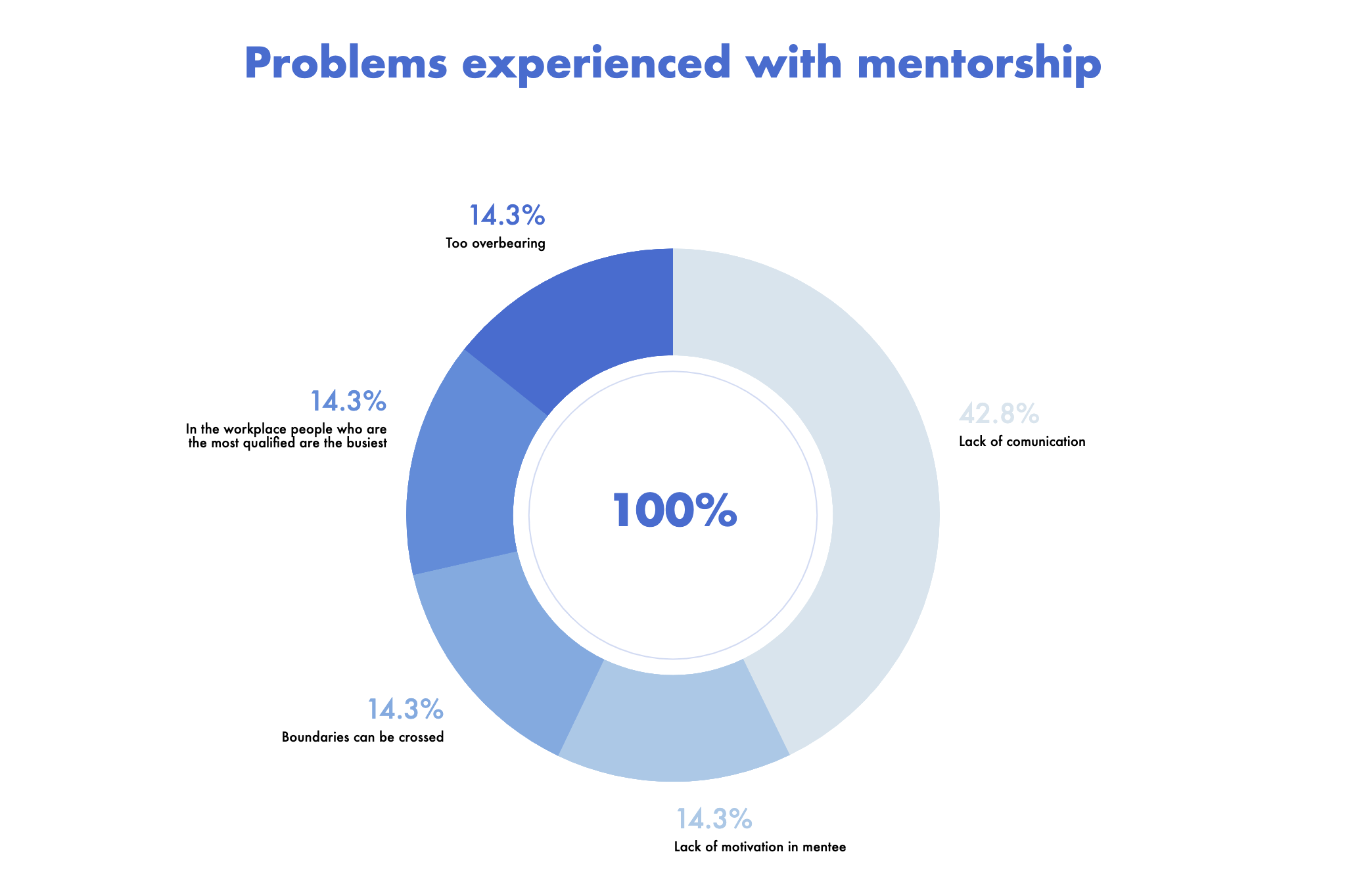
Lack of Communication: The most common challenge in mentorship is weak or inconsistent communication. When expectations are unclear and check-ins are irregular, mentees struggle to build trust and stay engaged in the relationship.
Misalignment and Motivation: Many users experience frustration when mentors lack the right experience or fail to inspire growth. This misalignment often leads to decreased motivation and limits the long-term value of the mentorship.
Boundaries and Overreach: Some users report that mentors either cross personal boundaries or become too controlling. These experiences show the need for clearer guidelines and better training to support healthy, respectful mentorship dynamics.
Persona
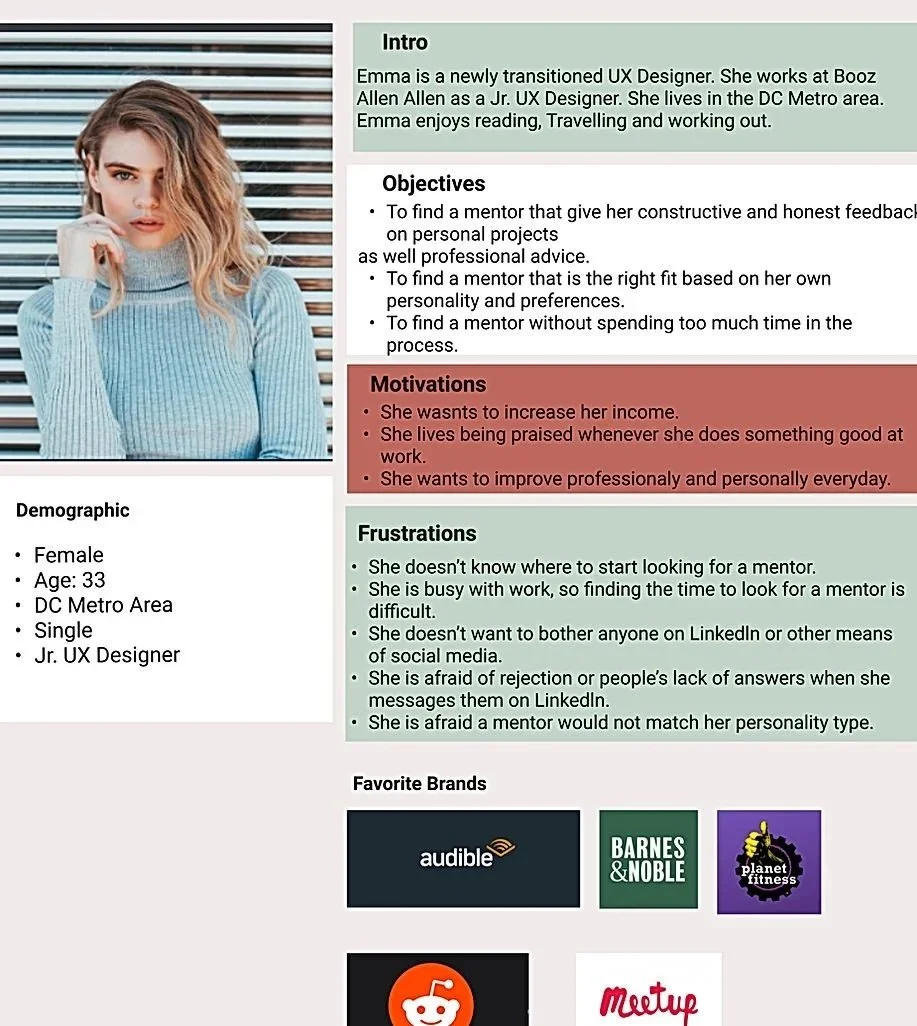
Emma represents early-career designers seeking personalized guidance, emotional support, and efficient access to mentorship. This persona was derived from key user research insights and informs matching, onboarding, and communication features.
Lo-fi Prototype
To determine which design approach best supported users like Emma, we conducted A/B testing on our lo-fi prototype to evaluate two key features and their impact on confidence and engagement.
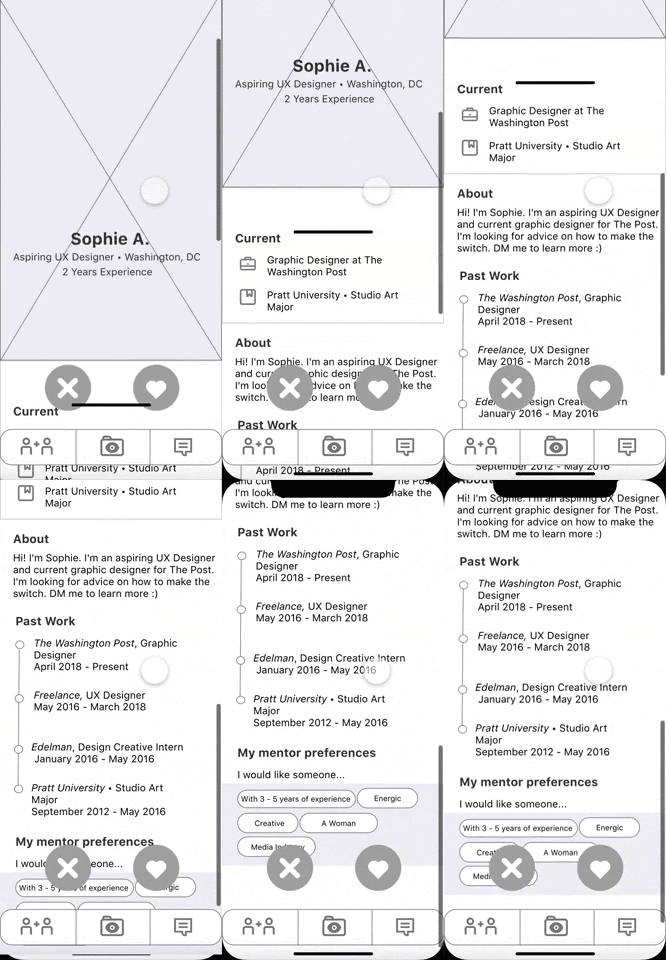
Sign up process before questionnaire
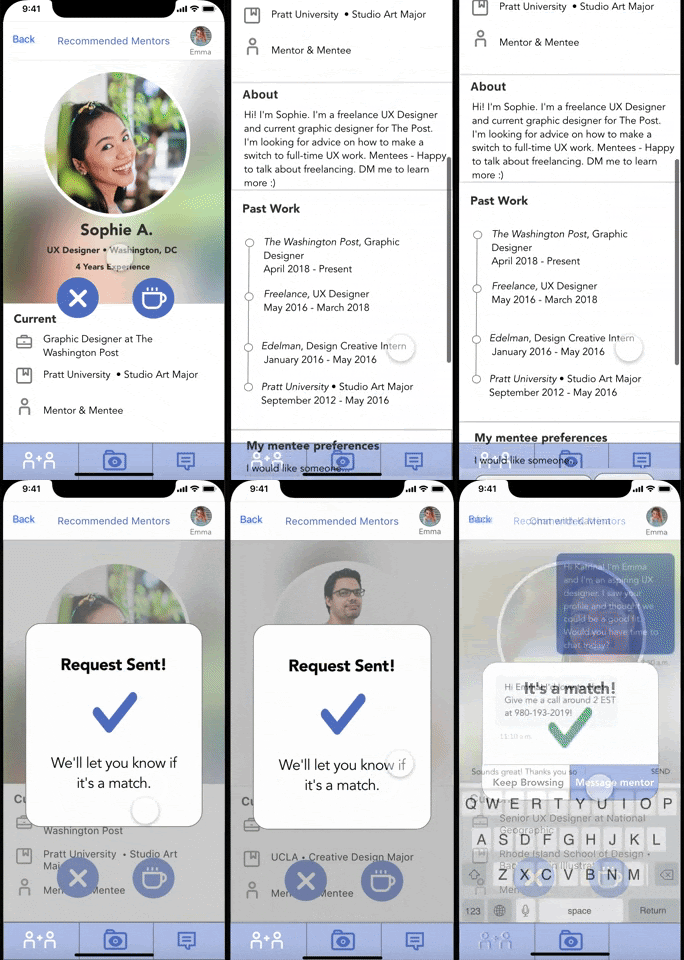
Scroll for more mentor details
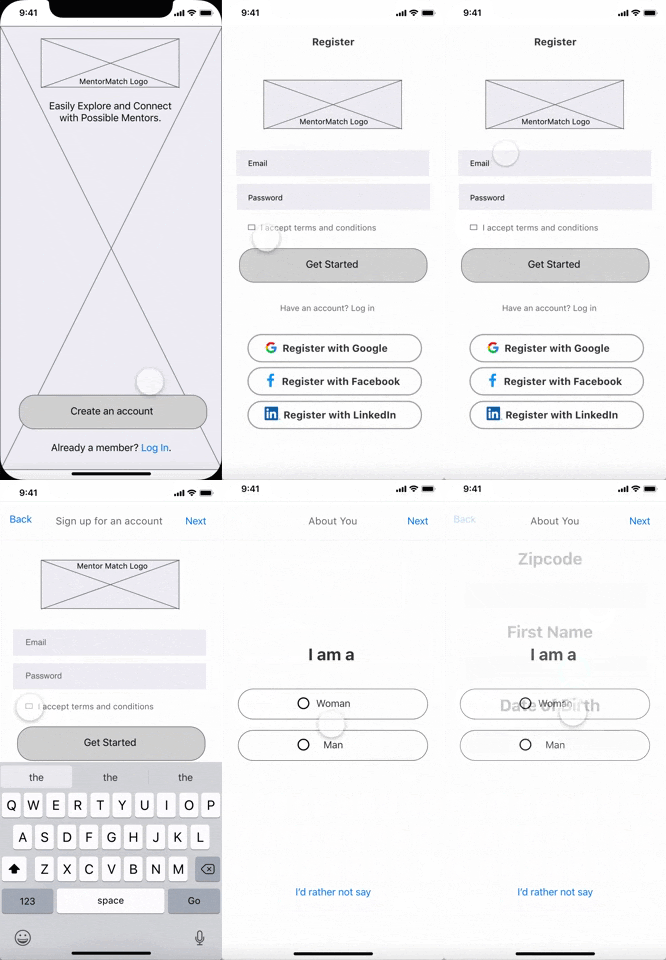
Sign up process after questionnaire
Top for more mentor details
User Testing
Participants imagined being someone who changed careers and was assigned a new project. They used Mentor Match to find a suitable person outside of their workplace to provide feedback. The tasks they completed on the platform included:
Complete the onboarding questionnaire.
Task 1
Learn more about a mentor’s professional experiences.
Task 2
Task 3
Match and message a mentor.
Upload your resume and give feedback on others’ work.
Task 4
Users praised the app's effortless and intuitive onboarding process, which coupled with its user-friendly features, allowed for a confident and comfortable experience. The app's social media-like format enabled personalized and engaging interactions, facilitating quick connections and impactful experiences for users.
The Results
Final Product
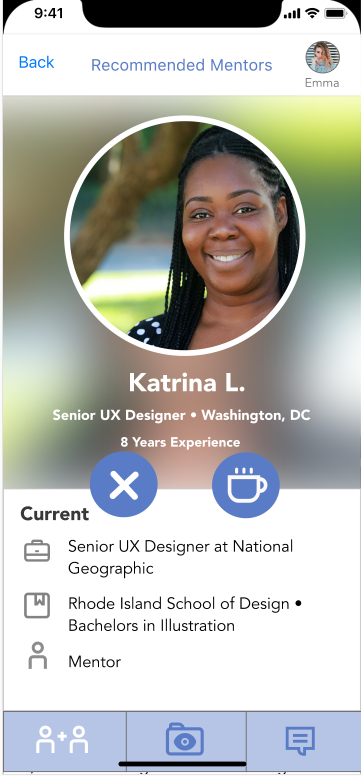
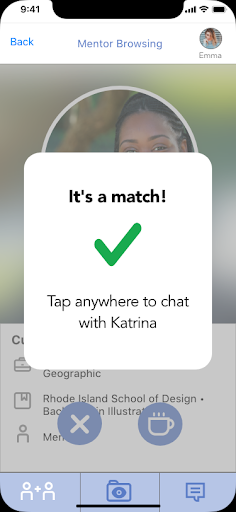

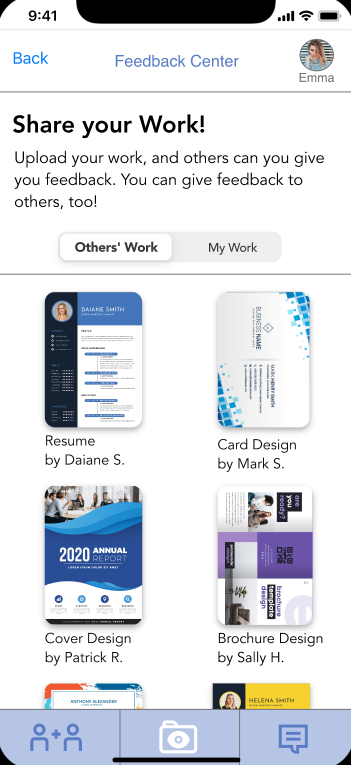
We tested our final prototype and found participants preferred having the questionnaire after the onboarding process rather than before. We made the necessary adjustments for a smooth user experience. Users liked the coffee cup "like" button, so we included it in the final product to enhance the user experience. These adjustments show our commitment to user-centered design.
To maximize efficiency, it's crucial to target a specialized population from the outset of the research phase. Additionally, recognizing and utilizing team members' unique strengths can save time and lead to a more successful outcome. In terms of the visual design of the app, professionalism is of utmost importance for this project. While user testing in Zoom can be limiting, it's still a valuable tool to gather feedback. Finally, completing a two-week sprint is certainly challenging, but with dedication and focus, it can be accomplished.